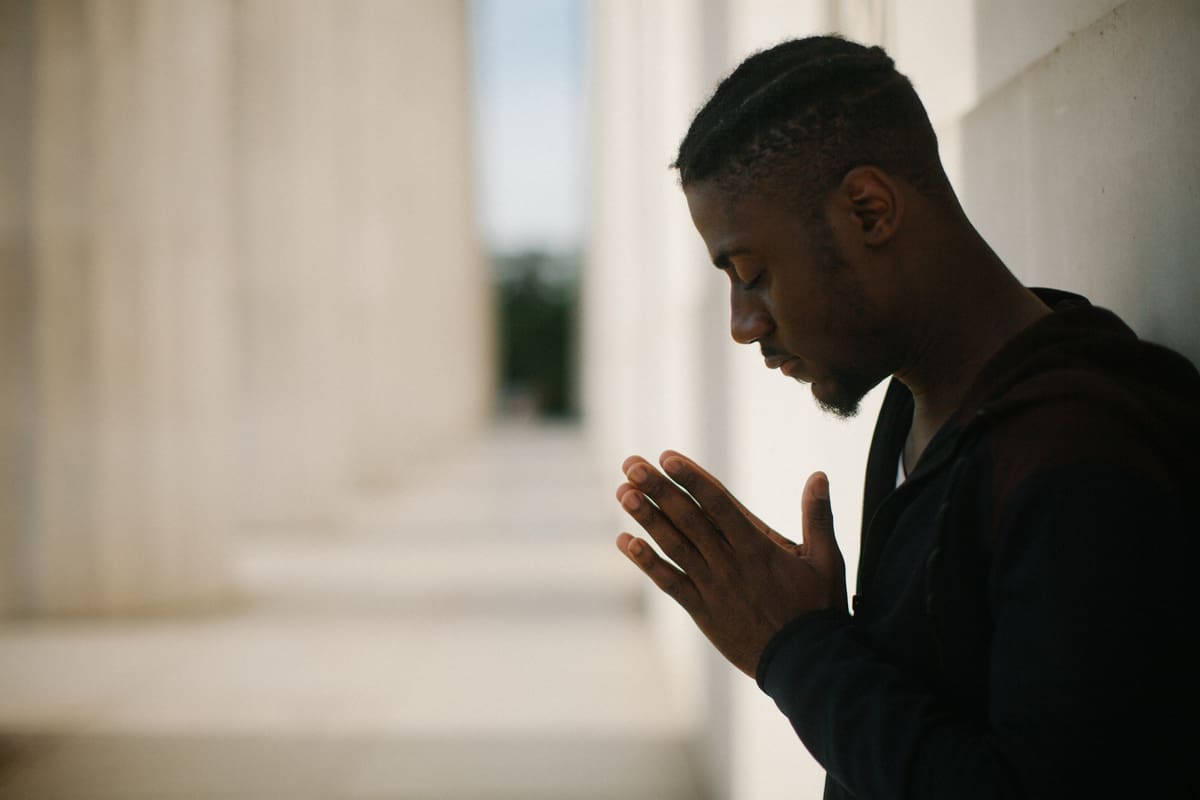
Last weekend we kicked off a sermon series at Faith Church on prayer, which we have titled “Talking with Jesus.” I like this title for a series on prayer for a couple of reasons.
One reason is that it is a reminder that prayer shouldn’t be viewed as a one-sided conversation in which we are simply talking “to” someone – sharing our thoughts and ideas without any concern for what they might be thinking or wanting. We don’t like it when people talk “at” or “to” us but rather “with” us; true relationships are conversations “with” people and thus should be how we approach our interaction with God.
The other reason that I like this title is its reference to Jesus. Sometimes people think of prayer as simply “talking to/with” God, but such a generic reference to “God” can allow people to think of Him in various ways that may not correspond to who He really is. The only God that there is and to whom we are to pray is the one who has revealed Himself in Jesus and eternally exists is Father, Son, and Holy Spirit. In fact, one of the more remarkable elements of the early church is the way they prayed to Jesus. For example Paul’s prayer for the Thessalonian Christians in 1 Thessalonians 3:11 is addressed to “our God and Father himself, and our Lord Jesus,” with his request to increase in love directed simply to the “Lord” – which would be Jesus! Paul was raised as a faithful Jew who affirmed that there is only God and that He alone should be prayed to, and now we see him praying to Jesus, showing both the remarkable transformation in Paul and also the early affirmation of the divinity of Jesus, identifying him with the one God yet differentiating him from God the Father.
While it is helpful to think of praying as “talking with Jesus,” we still might wonder how it is that we are to talk to him and what we are to talk to him about. There are many different definitions for and descriptions of prayer out there, but one that I appreciate and find useful is the one that is found in the Westminster Shorter Catechism Q&A 98, which answers the question of “What is prayer” by stating, “Prayer is an offering up of our desires unto God, for things agreeable to his will, in the name of Christ, with confession of our sins, and thankful acknowledgment of his mercies.” Let’s unpack this description that draws upon what Scripture teaches us about prayer phrase by phrase.
“Offering up of Our Desires unto God”
God invites us to come to Him and to share what is on our hearts. We see this call in places like Psalm 62:8: “Trust in him at all times, you people; pour out your hearts before him. God is our refuge.” Paul says something similar in Philippians 4:6: “Don’t worry about anything, but in everything, through prayer and petition with thanksgiving, present your requests to God.”
While prayer should be more than a laundry list of things we want to see happen, we do not need to be afraid or ashamed to ask Him for what we need. Jesus tells us that we are to ask for our daily bread and to not be afraid to ask. James 4:2 reminds us that we have not because we ask not. This element of the conversation is both reflective of the fact that we share our desires and thoughts with those closest to us and also because we need not be afraid or ashamed to ask for help and admit our need.
We should also recognize that prayer is directed to God. We are to pray to Him alone and not to other people or to angels, but only to God. We do so because we know that He always hears and He has the ability to act and respond.
“For Things Agreeable to His Will”
While we are invited to pour out our hearts and ask for what is on our heart, we need to recognize that the things we ask for should be reflective of His will. In fact, the Bible says there are things we should not pray for, such as the“sin that leads to death” (1 John 5:16). I don’t have time to explain that tricky verse but want to highlight how it shows that there are things off limits in prayer. After saying that we have not because we ask not, James also notes that “You ask and don’t receive because you ask with wrong motives, so that you may spend it on your pleasures” (James 4:3). God is not a genie who just does what we want; He is the Lord of the universe who directs us how to live and whose will is for our good and His glory.
We should not ask God for things that He disproves of as doing so does not reflect a true trust and belief in who He is and that He is good. This is also a reminder that at times we might desire things that we think are good for us but might not be what is best for us in the moment. This does not mean that we must always end prayers with “but your will be done,” but it does mean that we should approach God with humility, submitting to His desires and plans for us rather than our potentially misguided hopes. We can have confidence He hears and grants our prayers when they are pleasing to Him (1 John 5:14), so we should make sure to be asking for things agreeable to His will. We should thus have both boldness and humility as we converse with Jesus.
“In the name of Christ”
We are instructed to pray in the name of Christ. This does not simply mean invoking his name at the end of our prayer as a secret password. Rather, it is recognizing that the only reason we can pray to God is because of the work of Jesus and that we can have boldness in prayer because of what He has done for us (Ephesians 3:12; Hebrews 4:16). It is recognizing that God hears our prayers because they come to Him through the person of Jesus and that God hears and grants the request because of Jesus’s work as opposed to our own (John 14:13,14).
“With Confession of Our Sins”
Praying in the name of Jesus then points to one of the components that should be in our prayers, which is confession. Part of our prayer should be in confessing our sins before God. We do so not to feel bad but rather to recognize who we are and also to discover the promise of forgiveness that God grants to those who confess their sins and look to Jesus (1 John 1:8-2:2).
“Thankful Acknowledgment of His Mercies”
Confession of sin should naturally lead to thanksgiving for His mercy, as we recognize that we have been rescued from the penalty for and power of sin in our lives through trusting in the one who died and rose again. Such thanksgiving also leads to confidence in terms of God’s goodness to us and His plan; if He has rescued us from our sins, then God will grant and give us what we ultimately need in His timing and through His ways.
A Good Word But Not the Only Word
I find this definition of prayer from the Westminster Shorter Catechism to be a good explanation about prayer, but I want to make sure we see that it is not exhaustive of everything that could or even should be known or said about prayer. A quick look over the companion work to the Westminster Shorter Catechism, the Westminster Larger Catechism, to see other important aspects of prayer. Q&A 178 of that work states after its comment concerning praying in the name of Christ that we pray “by the help of his Spirit.” This statement is drawn directly from Scripture, as we read in Romans 8:26: “In the same way the Spirit also helps us in our weakness, because we do not know what to pray for as we should, but the Spirit himself intercedes for us with inexpressible groanings.” We should not forget the work of the Spirit in our prayers, as he aids us in this area. Therefore, prayer is a great way to be reminded that we are never alone or on our own. Instead of remaining quiet or just talking to ourselves, let us have these conversations with Jesus.
Questions about the Bible or theology? Email them to Pastor Brian at Theology@WeAreFaith.org. You can also request to receive weekly emails with our blog posts by filling out the information on the right side.